
Why Mixer Quality Matters More Than Speakers in Auditoriums, Live Events & Conferences
If you’ve ever attended an auditorium event where the speakers looked expensive but the audio still felt “unclear,” you already know a hard truth of live sound: loud is not the same as clear. In conferences, corporate events, panel talks, school functions, and even live band shows, the audience doesn’t judge your sound system by brand names—they judge it by one simple outcome: Did I understand every word and enjoy every note?
That outcome depends heavily on what happens before sound reaches the speakers. Speakers are the final delivery system. The mixer is the control room. And in most real venues—especially auditoriums with reflective walls, balconies, and long throw distances—mixer quality (and how it’s used) often impacts the result more than
upgrading speakers alone.
Professional Equipment • Trained Engineers • On-time Setup
What a Mixer Actually Does (In Simple Terms)
Think of a live event as many sound sources happening at once: multiple microphones for speakers, a podium mic, handheld mics for Q&A, laptop audio for a video, background music, and sometimes instruments. The mixer’s job is to:
- Balance all sources so nothing is too loud or too soft.
- Shape clarity so speech is crisp and music is pleasant (not harsh or muddy).
- Control problems like feedback, sudden peaks, humming, and uneven tone between mics.
- Route audio to mains, delays, front-fills, stage monitors, recording, livestream, or conference feeds.
In other words, speakers amplify what you send them—but the mixer decides what gets sent and how it behaves when the event becomes “real” (people moving, mics changing hands, presenters speaking softly, sudden applause, videos playing, etc.).
Why “Mixer Quality Affects Frequency Response” (Better Explanation for Real People)
You might see a technical sentence like: “Mixer quality affects frequency response.” That’s true, but it sounds too abstract for most event planners. Here’s what it means in practical, event language:
A better mixer helps voices sound natural and clear—not boomy, not thin, not harsh—because it gives the sound engineer more accurate control over tone. When we adjust EQ on a good mixer, the changes are smoother and more precise. That means we can remove the “muddiness” that makes speech hard to understand, without making the voice sound artificial.
So instead of saying “frequency response,” you can say: “A quality mixer lets us clean up speech and music more accurately, so the audience hears clarity, not just volume.”
The Real Reason Mixers Matter More in Auditoriums
Auditoriums are challenging because sound bounces. Reflections from walls, ceiling, and balcony faces can smear speech. The audience might hear the same word twice (direct sound + reflected sound), which reduces intelligibility. You can’t fix auditorium reflections with “bigger speakers.” You fix the result by:
- Optimizing mic gain and EQ to improve speech intelligibility.
- Using compression carefully so soft speakers stay audible without harsh peaks.
- Managing multiple microphones so background noise doesn’t build up.
- Routing audio properly to delays and fills (if used) so coverage stays consistent.
All of this is mixer-driven work. That’s why, for conferences and speeches, a mixer upgrade can feel like a bigger improvement than a speaker upgrade—because it fixes the issues the audience complains about most: unclear voice, inconsistent levels, feedback, and fatiguing sound.
Speech First: Conferences Are Won or Lost on Vocal Clarity
In corporate events and conferences, the “product” is the message. If the audience misses key points because the audio is muddy, the event feels disorganized—no matter how premium the lighting or stage looks.
A high-quality mixer helps speech in three important ways:
1) Better Gain Structure = Cleaner Voice
A good mixer (and a good operator) can run microphones at healthy levels without noise and distortion. Many speech issues happen because people push levels in the wrong place (too much gain at the mic, too little at the channel, or overdriving the main bus). With a capable mixer, we can manage headroom and keep the voice clean even when a speaker suddenly talks louder.
2) Precise EQ = Less Mud, More Intelligibility
Most speech muddiness lives in low-mids. But removing it carelessly makes voices thin and uncomfortable. Better mixers provide more accurate EQ tools, letting us reduce muddiness while keeping the voice warm and present.
3) Controlled Dynamics = Consistent Volume for the Audience
Different speakers have different voice levels. Compression, used tastefully, keeps volume consistent without sounding “squashed.” A quality mixer gives you cleaner dynamics processing so it feels natural to the audience.
Why Expensive Speakers Still Sound Bad with a Weak Mixer
This is the part many people don’t realize: speakers cannot create clarity that isn’t present in the signal. If the mixer output is messy—uneven levels, harsh EQ, feedback-prone gain—then premium speakers will reproduce that mess more accurately. You’ll get “very loud bad sound.”
On the other hand, if the mixer output is clean—balanced, clear, controlled—then even mid-range speakers can sound impressive in many real-world events.
What “Mixer Quality” Really Includes (Not Just the Brand)
Mixer quality isn’t only about the logo. It’s about how well the mixer helps you manage a live event under pressure. Key factors:
- Clean preamps: reduces hiss/noise, improves speech clarity.
- Headroom: handles loud moments without ugly distortion.
- Better EQ & filters: more control to cut feedback frequencies and clean up muddiness.
- Reliable dynamics: compression/gates that behave smoothly for voice and music.
- Routing flexibility: mains + monitors + delays + recording/livestream feeds.
- Scene recall: save settings for repeat venues and repeat event formats.
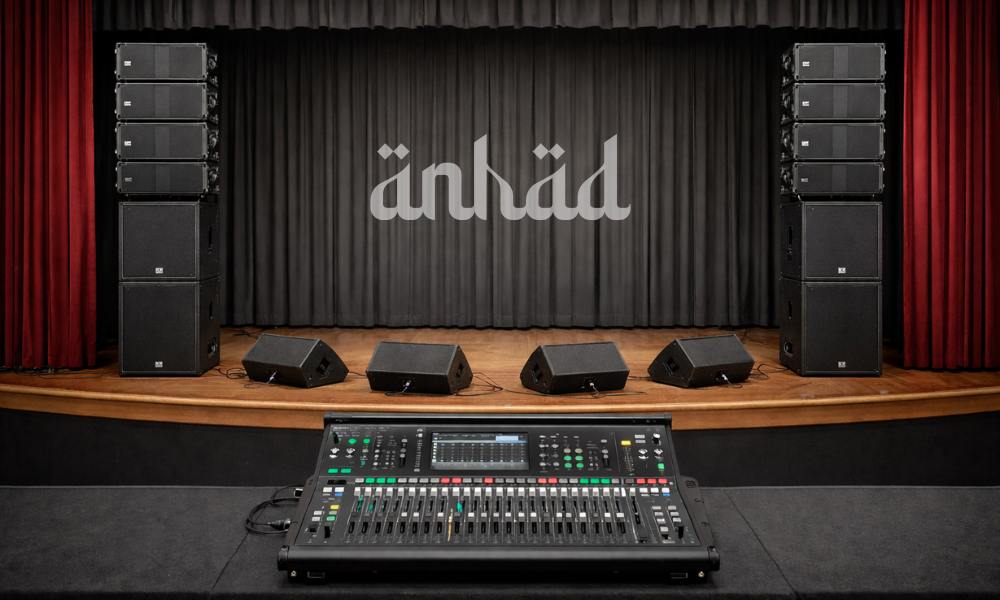
For example, digital mixers like the Allen & Heath SQ7 are popular for professional event workflows because they offer deep control and fast recall—useful in auditoriums, conferences, and multi-session events where consistency matters. (What matters most is still the operator and system tuning, but a capable console makes professional workflow easier.)
Common “Bad Sound” Problems That Are Actually Mixer Problems
1) Feedback (Squealing)
Feedback is usually a gain/EQ/monitor placement issue, not a speaker brand issue. A better mixer (and proper EQ technique) helps ring out problem frequencies and stabilize the system.
2) “Voice Is Loud But Not Clear”
That’s almost always EQ and mic management. Without proper filtering and midrange shaping, voices can feel loud yet unintelligible.
3) Uneven Audio Between Speakers
Panel discussions often suffer from level mismatch. One mic is loud, another is soft. A mixer with good metering, dynamics, and fast control helps maintain consistency.
4) Video Audio Sounds Weak or Harsh
Laptop audio needs proper gain staging and EQ too. If it’s not managed at the mixer, it can feel thin, harsh, or too quiet compared to microphones.
How to Reach “Premium Sound” Without Overspending on Speakers
If your budget is limited, here’s a smarter order of investment for most auditorium and conference needs:
- Microphones suitable for the job (handhelds, headsets, lavs as needed).
- A capable mixer with reliable EQ/dynamics/routing.
- System tuning (speaker placement, aiming, gain structure, and basic acoustic awareness).
- Speakers upgrade (when coverage or output genuinely needs improvement).
Why this works: if speech is clean at the source and controlled at the mixer, your speakers spend less time fighting problems and more time delivering impact.
Quick Checklist: Choosing the Right Mixer for Auditorium Events
- Channel count: Always plan extra channels for surprises (guest mic, extra laptop, announcements).
- EQ and filters: High-pass filters per channel and flexible EQ are crucial for speech.
- Dynamics: Clean compressors help keep speech steady.
- Outputs: Mains + monitor sends + possible delay sends if venue is deep.
- Reliability: Live events need stable performance, not “sometimes it works” gear.
- Workflow speed: The faster the engineer can fix a problem, the smoother your event feels.
Local Note: Auditoriums & Corporate Events in Delhi NCR
In Delhi NCR, venues vary drastically—hotel ballrooms, school auditoriums, community halls, open-air stages, and corporate conference spaces. Each has different acoustics and audience expectations. That’s why planning the audio chain properly matters. A professional mixer setup, paired with correct mic selection and speaker placement, usually creates the “premium sound” people remember.
At Anhad Light & Sound, our approach for auditorium and conference audio focuses on: speech intelligibility, consistent coverage, feedback control, and a calm event experience—not just big speaker stacks.
Conclusion: Speakers Are the Output—Mixers Are the Brain
Speakers are important, but they are not the place where clarity is created. In auditoriums, conferences, and live events, most “bad sound” complaints are really problems of control: uneven levels, muddy speech, feedback, harshness, and noise. A quality mixer—used properly—solves these at the source.
So if you’re planning your next auditorium event, don’t only ask, “Which speakers are you using?” Ask: “What mixer are you using, how are you managing microphones, and how will you keep the voice clear for the entire audience?”
When the mixer and engineering are right, even a modest system can sound professional. When the mixer and control are weak, even premium speakers can disappoint.
FAQs: Mixer vs Speakers for Auditorium & Live Events
Is a better mixer really more important than better speakers?
What causes mic feedback in auditoriums?
For conferences, what is the #1 priority in sound?
Do I need a digital mixer for a live band?
How do I choose the right sound setup for my auditorium in Delhi NCR?
Final Takeaway
If you want that “premium auditorium sound” where vocals feel close, clear, and controlled, focus on the mixer and engineering first. Speakers matter, but the mixer is where sound becomes intelligible, musical, and comfortable.
For auditorium sound setup, conference sound on rent, and live event sound in Delhi NCR, Anhad Light & Sound helps you plan the right chain—so your audience hears quality, not just volume.
Call/WhatsApp: 9709703100 | Request a Quote